Day Trips from Paternoster: 8 West Coast Towns to Visit
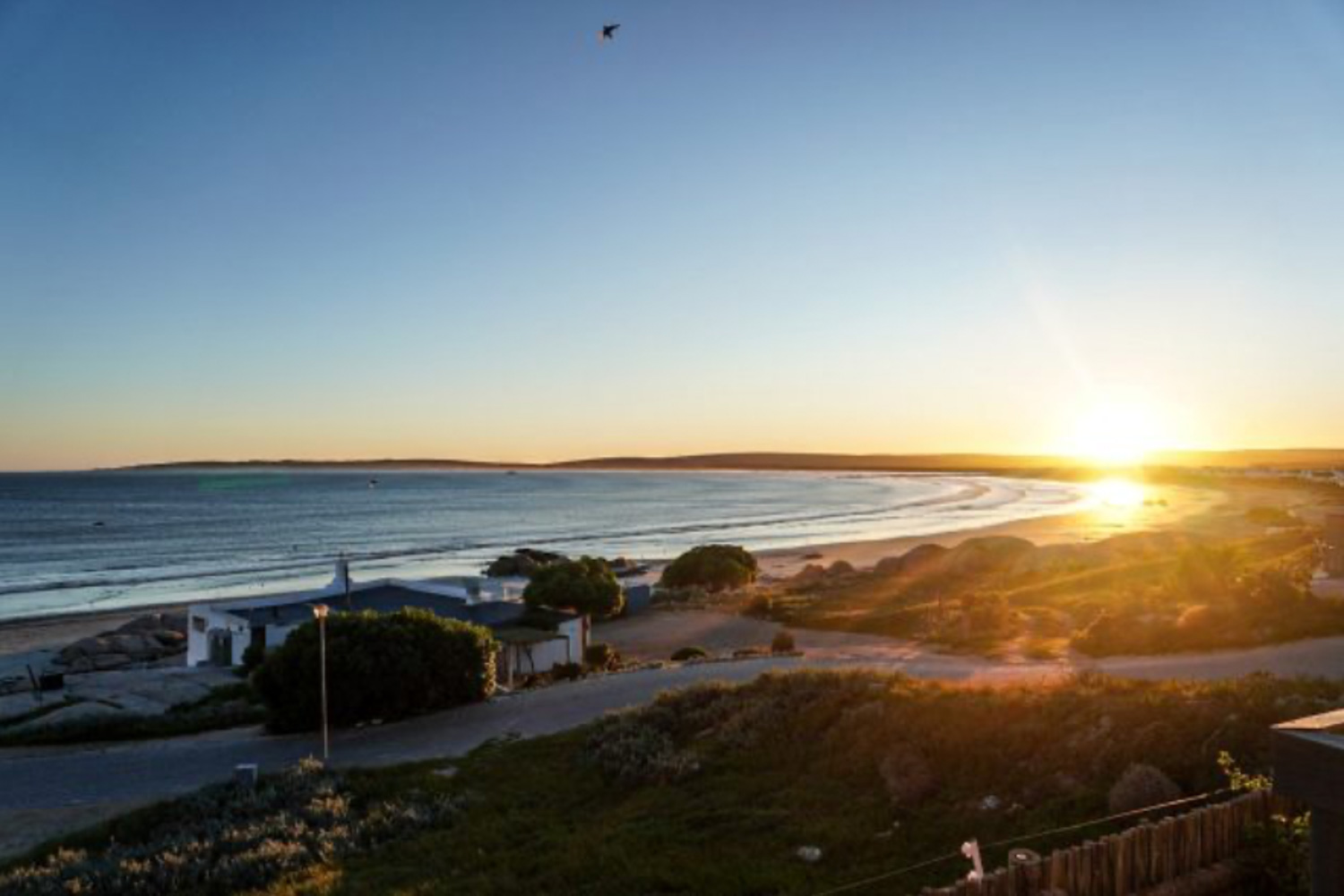
Paternoster is small on purpose. Two or three days in, most guests have walked the beach, eaten their body weight in seafood and found the lighthouse, and the question turns to what else is within reach. The answer is more than people expect. From Abalone Hotel & Villas, eight West Coast towns sit inside a 75 minute drive, and seven of them inside 50 minutes. Fishing harbours, a five million year old fossil bed, a lagoon you can kitesurf across, a lane of dried fish, and a theatre in an old railway station.
This guide covers each one: how long the drive takes, what is actually worth stopping for, where to eat, the season that suits it best, and an honest line on who will not enjoy it. If you would rather stay put, we have 36 things to do in Paternoster without leaving the village, and a list of experiences we can arrange from the hotel.
At a glance: eight day trips from Paternoster
Drive times below are from the hotel in Paternoster. If you are coming up for the weekend, the drive up from Cape Town takes roughly two hours, so none of these are day trips from the city unless you are prepared to spend most of the day in the car.
| Town | Drive | Best for | Best season | Half or full day |
|---|---|---|---|---|
| Vredenburg | 15 min | Shops, fuel, a proper grocery run | Any | An hour |
| Jacobsbaai | 25 min | Empty coves, rock pools, a picnic | Spring and summer | Half day |
| West Coast Fossil Park | 30 min | Fossil site tour, children over six | Any, closed Mondays | Half day |
| Saldanha | 35 min | Sheltered swimming, harbour, oysters | Any, best when Paternoster is windy | Half day |
| St Helena Bay | 40 min | Sunrise over the sea, whales, history | July to November | Half day |
| Langebaan | 50 min | The lagoon, watersports, a long lunch | Summer | Full day |
| Velddrif | 50 min | Bokkomlaan, flamingos, the estuary | Spring and summer | Full day |
| Darling | 75 min | Theatre, beer, wine, wildflowers | August and September | Full day |
Vredenburg, about 15 minutes
Vredenburg is the closest town to Paternoster, it is not a scenic one, and it would be dishonest to pretend otherwise. It is the commercial centre of the Saldanha Bay peninsula, and it is on this list for a practical reason: it has the supermarkets, the pharmacies, the banks, the hardware and the fuel that Paternoster does not.
If you are self-catering in one of the villas, this is where the real grocery shop happens, and it is worth doing on the way in rather than losing a morning to it later. Saturday mornings are the busiest. Most visitors combine it with Jacobsbaai, which is ten minutes further on, or with the Fossil Park on the Langebaanweg road.
Where to eat: the chain coffee shops and bakeries on and around Main Road are reliable rather than memorable. Best season: any. Who will not enjoy it: anyone treating it as a destination. Treat it as an errand with a good road either side of it and it earns its place.
Jacobsbaai, about 25 minutes
The one most guests have never heard of, and the reason to drive past Vredenburg rather than turn around in it. Jacobsbaai sits between Vredenburg and Saldanha on a two kilometre stretch of coast broken into seven small bays. Strict building rules have kept it to lime-washed walls and low roofs, most of the roads are still gravel, and there is almost nothing commercial in the village.
Kwaaibaai is the surfing bay. Smalbaai and Moerie se Baai are where the boats go in. Bamboesbaai and Toothrock are for diving and fishing. Between them are rock pools and sheltered coves that are usually empty, even in December. Walk the coastal path from one bay to the next, swim when the swell allows, and watch for whales, which pass close to this shore for much of the year.
Where to eat: bring it with you. There is no reliable restaurant in the village, which is part of the appeal and also the catch. Best season: late winter and spring for the flowers on the approach road, summer for swimming. Who will not enjoy it: anyone who wants shops, a coffee, or a programme for the day. Jacobsbaai is two hours of walking and looking, then home.
West Coast Fossil Park, about 30 minutes
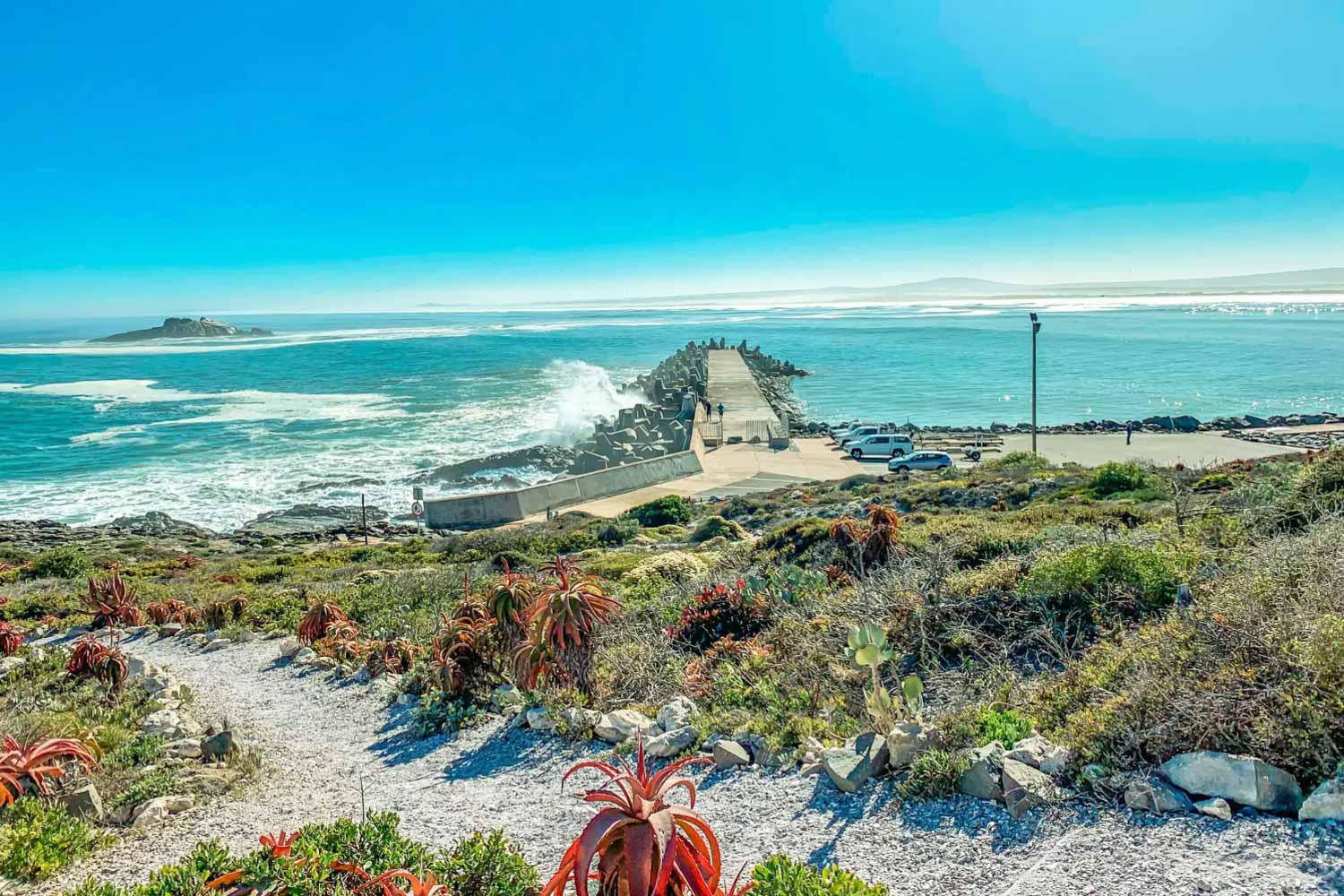
An old phosphate mine near Langebaanweg turned into one of the richest fossil sites in the world. The bone bed here is roughly 5.2 million years old and holds species that no longer exist anywhere: the short-necked giraffe, a sabre-toothed cat, a three-toed horse and an African bear. The excavation is under cover, and guided tours walk you onto the site itself rather than past a display case. Details are published on the West Coast Fossil Park visitor page.
There is a museum you can walk on your own, and marked cycling and walking trails across the old mine workings if you want to make a morning of it. The park is closed on Mondays. Tours run on the hour through the middle of the day and are shorter on weekends, so a late arrival on a Sunday can miss the last one.
Where to eat: there is a small cafe on site. Best season: any, though the open site is hot in midsummer and the morning tours are more comfortable. Who will not enjoy it: children under about six, who will be bored, and anyone expecting a large city museum. The interest here is that you are standing on the dig.
Saldanha, about 35 minutes
Saldanha has the largest natural harbour in South Africa, and the bay behaves nothing like the open coast at Paternoster. It is sheltered, the water is noticeably warmer, and on a day when the wind has flattened the Paternoster beach this is where locals go to swim. Hoedjiesbaai and Blue Bay are the two beaches to aim for.
The working harbour is worth half an hour on its own: deep-sea fishing vessels, salvage tugs, and a factory shop selling fish off the boats. Oysters and mussels are farmed in the bay, and boat trips run out to the farms. There is kayaking, and the bay is a long-standing sailing and kitesurfing spot. The Saldanha Bay Cultural Village and Hoedjieskop Museum covers the fishing industry and the shipwrecks.
Where to eat: the harbour-side seafood places and the cafes on Main Road. Best season: year round, and particularly good on a windy day. Who will not enjoy it: anyone after an unspoiled harbour town. The iron ore terminal and the industrial port are visible from much of Saldanha, and that is simply what the place is.
St Helena Bay, about 40 minutes
St Helena Bay does something no other stretch of this coastline does: it faces north and northeast, so the sun comes up across the water instead of setting into it. If you have spent three days watching West Coast sunsets, an early drive here for the opposite is a genuinely different morning. Vasco da Gama made landfall in this bay on 7 November 1497, his first landing in what is now South Africa, and named it Bahia de Santa Helena. There is a monument to it above the bay. The South African History Online entry on Saint Helena Bay covers the landing and what followed.
It is still a fishing town first. Snoek and pelagic fish come in here, and a string of processing factories runs along the shore. Around the bay are Stompneus Bay, Britannia Bay, Laingville and Sandy Point, and to the west the Shelley Point estate with Shelley Bay beach, a golf course and a spa. Southern right whales are in these waters from roughly July to November, and the sheltered bay is one of the easier places to see them from land.
Where to eat: the hotel restaurants at Shelley Point and the harbour-side spots in Stompneus Bay. Best season: late winter to spring for whales, any time for the sunrise. Who will not enjoy it: the working harbour smells of fish, and the settlements are strung out along the bay rather than gathered into one walkable centre.
Langebaan, about 50 minutes
The lagoon is the reason to go. Sixteen kilometres of shallow, turquoise, unusually warm water, protected from the swell, and the best flatwater kitesurfing in the country. You can hire a board, take a lesson, paddle a stand-up board across the shallows or simply swim, which is not always a pleasure in the Atlantic at Paternoster. We have written about how Paternoster compares with Langebaan and Yzerfontein if you are still deciding where to base yourself.
The Langebaan gate into West Coast National Park is on the edge of town, which puts Kraalbaai, Preekstoel and the Geelbek restaurant within easy reach on the same trip. Club Mykonos sits on the point with a casino, restaurants and a marina. Die Strandloper, on the beach north of town, serves a long open-air seafood braai over several courses and has to be booked well ahead.
Where to eat: Die Strandloper for the full afternoon, Geelbek inside the park for something quieter. Best season: summer for the lagoon, August and September for the Postberg flowers. Who will not enjoy it: Langebaan is by far the most developed town on this list and it is busy over December and January. If you came to the West Coast for empty, go in the week.

Velddrif and the Berg River, about 50 minutes
Velddrif is the slowest of the eight and the one that rewards patience. Bokkomlaan is a short lane along the Berg River where bokkoms, salted and air-dried harders, still hang on racks the way they have for generations, with a handful of small galleries, studios and eating places in between. It is the closest thing the West Coast has to a living working heritage street.
The other reason to come is birds. The Berg River estuary and the salt pans hold pelicans, greater and lesser flamingos, blue cranes and herons, and West Coast Way records between 70 000 and 80 000 birds roosting at the De Plaat pans at night. There is a bird hide on the river, and boat trips and canal cruises run from the Port Owen marina. The sea fisheries museum at Laaiplek covers the fishing history.
Where to eat: the restaurants along Bokkomlaan and at the Port Owen marina. Best season: spring and summer for the flamingos and the estuary. Who will not enjoy it: it is flat, quiet and unhurried, and there is nothing to do quickly. Bring binoculars or do not bother.
Darling, about 75 minutes
Darling is the one full-day commitment on the list, and the only one that is inland. It is also the most different: a small farming town that has turned itself into a theatre, beer and wine stop. Evita se Perron, Pieter-Dirk Uys’s theatre in the old railway station, has been running satirical shows there for decades and serves lunch alongside them. Darling Brew is a short drive out of town. The Darling wine route takes in Ormonde and its neighbours, and if you want something closer to home, we have written about the wine farms closest to Paternoster as well.
In spring the town fills up for the flowers. The Tienie Versfeld Wildflower Reserve outside Darling is one of the reliable renosterveld displays in the region, and the Darling Museum and the self-guided town trail fill the gaps. On the way down the R27 you pass the !Khwa ttu San Culture and Education Centre, which is worth building into the same day rather than saving for another one.
Where to eat: Evita se Perron, or the cafes and bakeries around the main street. Best season: August and September for wildflowers, any time for the theatre and the breweries. Who will not enjoy it: anyone hoping to squeeze it into an afternoon. Two and a half hours of driving is the price of admission, so give it the whole day or leave it out.
Three ready-made routes
If you would rather not plan it, take one of these as it stands.
- The seafood route, half a day. Jacobsbaai first for the coves and the rock pools, on to Saldanha for the harbour and the factory shop, and back to Paternoster in time for dinner. Roughly 90 minutes of driving in total, with two swims in it.
- The family route, a full day. The West Coast Fossil Park for a morning tour, then the lagoon at Langebaan for the afternoon, and a long seafood lunch or an early dinner on the beach on the way back. This is the one that works with children over six.
- The slow route, a full day. Velddrif for Bokkomlaan and the estuary, a stop at the bird hide, lunch at Port Owen, and the drive back along the R27 as the light goes. Swap in Darling instead if you would rather have theatre and beer than flamingos.
Every one of them comes home for dinner, and if you have not booked yet, the best restaurants in Paternoster fill up fast over weekends and holidays.
What to take with you
- Cash. Several padstalle, the smaller Bokkomlaan traders and some of the village stalls do not take cards, and signal is patchy in places.
- A windbreaker, whatever the forecast says. The southeaster comes up in the afternoon and the coast is ten degrees colder than the car park suggests.
- A full tank. Fuel is reliable in Vredenburg, Saldanha and Langebaan, and not guaranteed in the smaller places.
- Binoculars if Velddrif or St Helena Bay is on the list. They change both of those days completely.
- A cooler box and a picnic for Jacobsbaai, where there is nowhere to buy lunch.
- Sunscreen and a hat. The West Coast light is deceptive and the wind hides the burn.
Ask at reception before you leave. We keep current opening days, tide times and road conditions, and several of the experiences we can arrange from the hotel already run into these towns, including the Velddrif riverboat birdwatching and the Fossil Park.
| PLAN THE STAY AROUND THE DRIVES
Eight towns is more than a weekend holds. Guests who want to do the lot usually stay three or four nights, which also leaves room for the days when the weather decides for you. Have a look at our current packages and offers, or speak to reception and we will build the days around the drives. |
Frequently asked questions
What towns are near Paternoster?
Vredenburg is the closest at about 15 minutes, followed by Jacobsbaai at about 25 minutes, Saldanha at about 35 minutes and St Helena Bay at about 40 minutes. Langebaan and Velddrif are both roughly 50 minutes, and Darling is about 75 minutes inland. The West Coast Fossil Park, near Langebaanweg, is about 30 minutes away.
How far is Langebaan from Paternoster?
Langebaan is about 55 kilometres from Paternoster and the drive takes roughly 50 minutes on the R399 and the R45. It is comfortably a day trip, and the Langebaan gate into West Coast National Park is on the edge of town, so the lagoon and the park can be done on the same day.
What is there to do on the West Coast besides the beach?
A good deal. The West Coast Fossil Park runs guided tours onto a 5.2 million year old excavation site. Velddrif has Bokkomlaan and one of the best bird estuaries in the Western Cape. Darling has theatre at Evita se Perron, a craft brewery and a wine route. Saldanha has a working harbour and oyster farms in the bay, and St Helena Bay has whales in season and the site of Vasco da Gama’s 1497 landing.
Is the West Coast Fossil Park worth visiting with children?
Yes, for children over about six. The guided tour walks onto the excavation site itself rather than past a display case, which holds attention in a way a museum room does not, and there are cycling and walking trails across the old mine workings. Children under five tend to lose interest, and the park is closed on Mondays, so check the tour times before you drive out.
Can you do the West Coast as a day trip from Cape Town?
You can reach Langebaan, Darling or the Fossil Park from Cape Town in a day, but Paternoster and the towns beyond it make for a long one. Cape Town to Paternoster is roughly two hours each way before you add any of these drives on top. Staying on the coast turns four hours of driving into four separate mornings. Our the drive up from Cape Town guide sets out the route and where to stop.